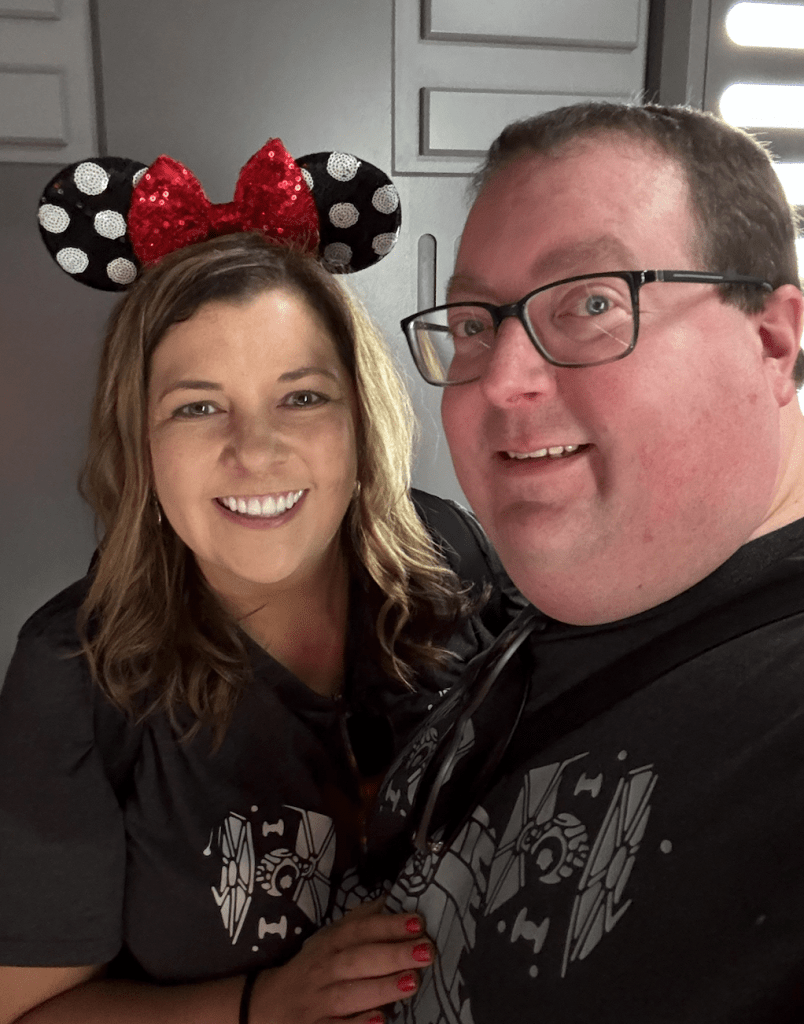
Over Spring Break, my husband and I went to Disney World for a few days. For both of us, it was the first time we’d been since we were kids.
We knew that Disney in the 1990s would look very different from Disney in 2025. As such, we went into it with open minds. However, we still took the opportunities to wear our outfits, don some ears, and get in a whole lot of steps.
About halfway through the first day, this blog post started forming — while we were waiting in a line for a ride (Slinky Dog) that we hadn’t purchase a Lightening Lane. As I shared my thoughts with Chris, he suggested this had the potential to be a strong blog, and throughout the trip, we paid attention to a few wins (and a miss) that higher education should employ in its work.
Here are the takeaways:
- Lines are unavoidable, so find ways to make them memorable: Disney did a great job creating moments in lines. Whether it was a display to look at, a series of themed memorabilia related to the activity, there was something to make the lines feel less tedious. As we think about our events, we can borrow this one and find ways to make lines at visit days, move in, or other high-traffic moments more enjoyable.
- If you capture data, find a fun way to incorporate it: Spaceship Earth was a great example of this. In the ride, we completed a brief survey about our interests, where we were from, and posed for a picture. Then later in the ride, we were presented with our own customized story. It felt personalized, but from the Disney perspective, they were using the opportunity to survey riders about where they were from, spending habits, and other metrics. Because it was packaged as a fun part of the ride, it didn’t feel intrusive and instead, felt like a value add because we got something in return. In higher ed, we often ask people to provide us data, but I think we can all do a better job incorporating it into our work.
- Pay attention to the organic happenings: Disney patrons started making Disney a moment with family-themed outfits (yup, we went there). Disney picked up on this organic desire to customize the experience and leaned in. Now, the Disney stores have brand partnerships with other brands and have hundreds of ear designs so people can pick the ears that best suit their individual personality. The wearing of Disney ears has also grown from just Magic Kingdom to other places, including EPCOT where each country offered its owned themed ears. In higher education, we should be paying attention to organic moments like move-in to capture the natural excitement that exists.
- Don’t Overdo Theming: This is one area that was a bit of a miss for us. Theming is important for a fun experience, but too much theming can impact function. For example, in the Galaxy Edge area, I had trouble finding the restrooms several times because the theming didn’t use the regular language. However, in the European area of EPCOT, the restrooms said restrooms not WC. I thought this was a great approach to take out theming in support of function. The takeaway for higher education is that as we theme our events an activities, it’s important to make sure the theme doesn’t impact the function of the event.
What am I missing?
If you’re a Disney connoisseur or have recently been to Disney, what are some other takeaways for higher education? Feel free to add your comments. I’d love to hear your thoughts!
 And Carrie On