I started working on my thought leadership about four years ago. Since that began, one of the most regular questions I’m asked is, how do I manage competing demands or how do I find the time to do multiple things.
When I first got this question, I would smile and give a deflection answer like I don’t sit still well. The reality was I hadn’t recognized how I managed; I just did. Over time though, I’ve realized I have a few specific approaches that help me manage the demands, and I wanted to share those as a better answer to that ongoing question.
Six Strategies for Managing Thought Leadership Demands
Joy – The first is finding joy in the work. For me, it’s fun to think of blog posts, craft new presentations, and build relationships with future and current leaders. When things are fun and bring us joy, I find it’s easier to prioritize them. My husband constantly tells me to do this work as long as it brings me joy. Additionally, he reminds me to stop the minute it doesn’t add joy. It’s not worth doing just because you’ve been doing it. Over the course of the four years, I’ve tried different opportunities and some of them I no longer do because they weren’t joyful. I have narrowed my participation based on what brings me joy and fulfillment. Additionally, I give myself one week off a month from writing and that allows me to be present in other ways.
Find Support – Another strategy is to find the support you need to be successful. Support looks different for me each week. Some days, support is as simple as someone unloading the dishwasher so I can write or send some emails about thought leadership. Other times, support is my group of MarComm gals engaging with a post that was really personal to me. A newer way I find support is through AI. I never expected it, but the tool is great at proofreading emails and blog posts each week. It also helps me to be a tighter writer. I’ve also used it to help me develop a plan for where I want my own thought leadership to go (because the original plan was just write). Support looks different each week, but there’s never a week where I don’t get support.
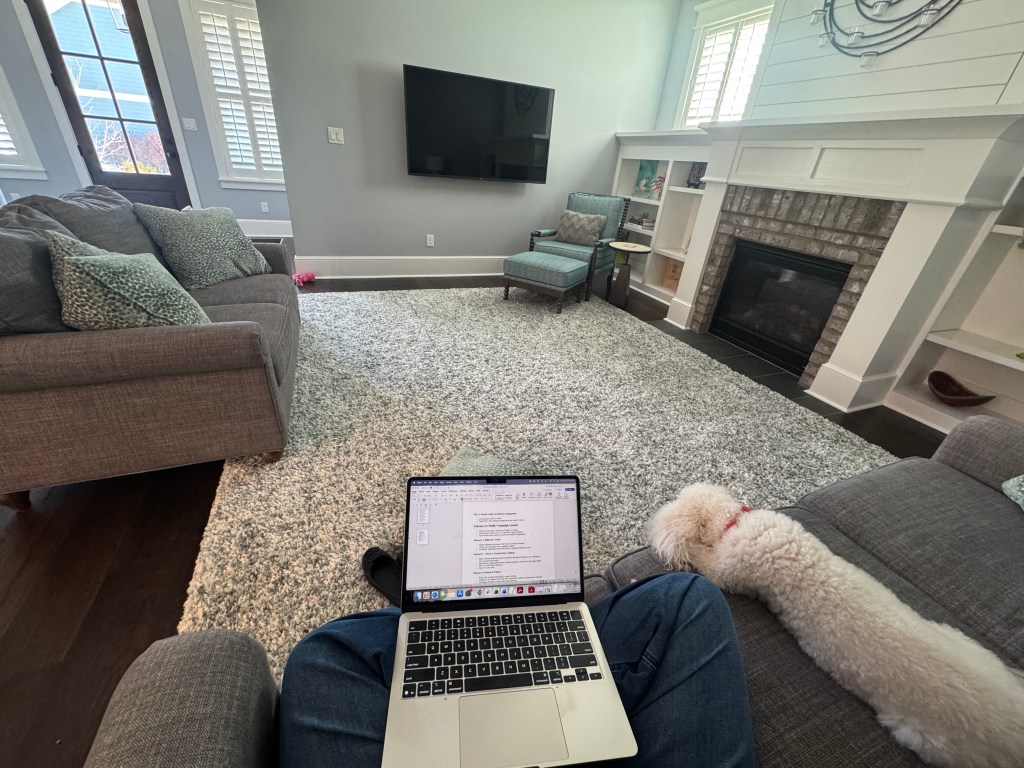
Discipline – I’m a planner at heart but have leveled up my discipline at thought leadership. Consistency is critical to keep your name out there, so I have a running list of website and LinkedIn content to create. Usually, I wake up early every Saturday or Sunday morning and write. Typically, I grab a Diet Coke and sit in the living room under a blanket and write by the light of a single lamp. That hour of being up alone to write helps me knock out my thought leadership before competing demands of the day begin. To make that work, I set an alarm every Saturday and Sunday to get my writing done, instead of sleeping until I wake up. In addition to writing for andcarrieon.com, I devote 2-3 hours each weekend to other thought leadership like writing an article for someone, crafting an outline, making a presentation, or practicing a presentation. Regardless of what’s the most pressing part, I’m committed to spending weekly time on thought leadership.
Strategy of To-Do Lists – One of the great gifts from my doctorate was learning to let go of getting everything off my list. In school I had to compartmentalize work each evening and focus on school tasks. I now use that strategy in my thought leadership. I have a to-do list for work that I review at the end of each day of what needs to happen the next day. Doing that helps make sure critical work tasks are accomplished on time. I also have several thought leadership lists. First, I have a list of what I need to work on each weekend, and I build that the Sunday night the week before. Then, as I have tasks throughout the week, I can add them to the list. This includes thought leadership tasks but also errands and chores. At the end of the weekend, if things didn’t get finished, I decide to move the tasks to the list for the next weekend. If I feel backed up, I may put a couple on a to-do list to accomplish throughout the week. This helps with the ongoing nature of the work. However, I found myself stressing about big things and keeping those on my radar. I created another list for this that has big picture tasks and presentations I’ve agreed to work on. It’s a holding place so I don’t lose track of those things. I pick one of these each weekend to tackle. Doing that keeps me from becoming overwhelmed.
Subconscious – This is one of my superpowers. I don’t think we give our subconscious enough credit for helping us. I started using this strategy last year and am blown away by how much it helps. Let me explain. I now look at a big task (especially one I’m not sure where to begin) and spend 5-10 minutes thinking about it before moving on to something else. I find my subconscious begins working through that tough challenge. Letting that part of my brain work on one thing while I’m working on something else has made me far more effective because when I come back to it, I usually have clarity of how to approach it. I also like using it in writing. For example, before I went to bed last night I looked at the prompt planned for today and sat with it for a minute. This morning, my brain had a pretty clear outline, and I’ve been able to write quickly and without much stress.
Bringing Others Along – I’m drawn to purposeful work, and one of the coolest parts of thought leadership is the opportunities it creates. I remember a leader once saying if you’re in an exclusive room, your job is to both do good work and prop the door open for others. I try doing this with thought leadership. As I’ve narrowed my focus, I’ve had the opportunity to pass along the names of others who would be good on a podcast or at a speaking event. Seeing others finding joy in sharing their expertise is really special, and they often don’t know I suggested them. Additionally, I’ve gotten to bring others along more directly through mentorship opportunities. I’ve taken on several mentees that I wouldn’t have had if it weren’t for thought leadership. Knowing my work is helping others makes it worth it.
What Else?
I’m sure there are lots of other strategies to help with thought leadership. If you’ve found something that works well for you, I’d love to hear how you’re being deliberate and productive in the work. Feel free to share in the comments!
 And Carrie On
Leave a comment