


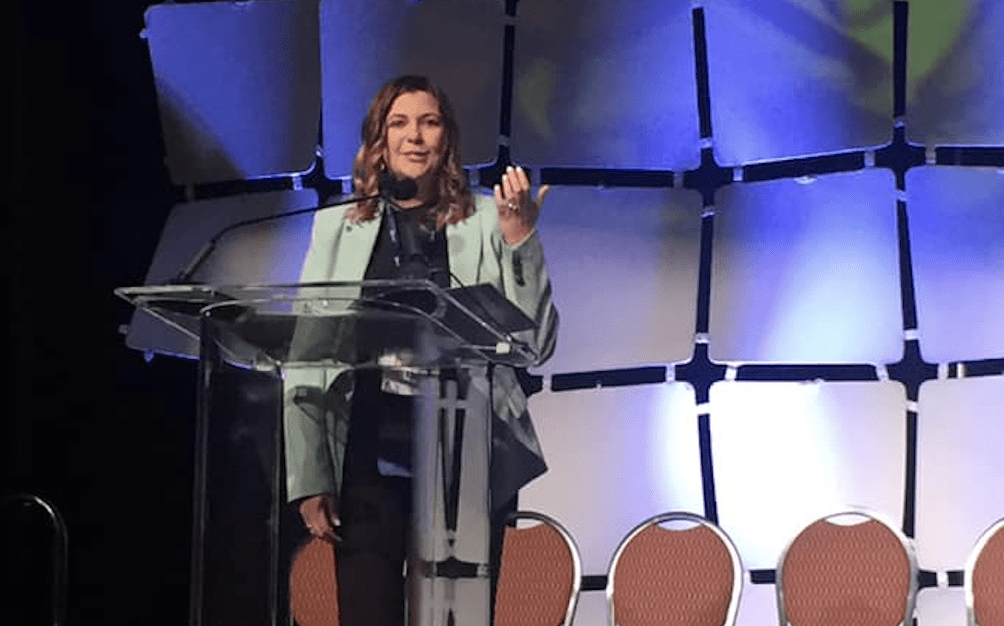
One way that I give back to the profession is printing at conferences across the country. Doing this several times a year has helped me to hone the “process” of taking an idea and turning into a meaningful presentation.
As we are in the midst of fall conference season, I thought it might be helpful to share my presentation prep process to help others prepare. To help frame this post, I’ve broken the process into three key parts: ideation, presentation, practice.
Ideation
Once I have an idea that’s been accepted, I need to turn it into a full presentation. The first step is creating a folder that holds all the presentation essentials. This is crucial because if I’m asked to present the topic in the future, it’s nice to have everything in one spot.
Then, I put the accepted description into a Word doc and build a bulleted outline from it. This is just key points, supporting ideas, and examples that come to mind. The presentation isn’t fleshed out into complete words yet, but you start to see the idea really come to life.
Here’s an example:

Presentation
Once the outline is done, the real work of turning a few bullet points into a presentation begins. My style is simple. I keep words on slides to a minimum, and most of my decks are built around images. I use them as visual anchors while I make the point and tell the story behind it. The goal is for the audience to stay engaged in the moment and later recall the message when they see the photo.
Because of that, I spend a lot of time hunting for the right photo to match the story. And since the slides don’t do the heavy lifting, it forces me to keep things conversational, which is exactly the tone I want when I present, but more on that in a moment.
Here’s an example:
I was talking in a presentation about the benefits of change and making the point that we shouldn’t fear change because it gives us opportunities to course-correct systems and processes that are broken, no longer make sense for the organization, or don’t align with how new personnel work.
I used this broken coffee mug image to illustrate the point. Everyone can see it’s broken, and fixing a coffee mug feels natural, so why not treat broken processes the same way?

Practice
The final thing I do is practice! About two weeks before a presentation, I print the outline and begin running the presentation. I show the slides on my screen and use the notes. I’m not focused on memorizing anything but am checking to make sure the slides and the stories match. Sometimes, a slide is needed for transition, or there’s an additional example (because life happens all the time) to add in. The first 2-3 run-throughs are locking this in. One thing to note, I never write down word-for-word what I want to say. I find if I do that, I’m too tempted to read it.
Once the flow feels right, I move to a more formal approach. I like to run the presentation this way about 2-3 times. I change the view of the slides from “preview” to “present” so I can’t see what’s coming next. This helps me internalize the order. During this time, I do full run throughs, meaning I say aloud the words I plan to use and go through the presentation from start to finish. That said, sometimes I need to stop and finesse a section and my make notes in my outline handout.
I like to take a day off in between practices to allow my subconscious to continue internalizing the presentation.
The week of the presentation, I’ll do a 2-3 timed runs to make sure the final timing is right. By this point, I’ve run the presentation 7-8 times, so I feel pretty comfortable with it. Usually, I don’t need notes. However, if it’s the first time I’m giving a presentation, I still like to have notes on stage, just in case I need a quick peek.
Here’s an example:
This is a starting run through to make sure the slides and the outline align.

Honoring the Process
For me, presenting works best when I have a clear process for shaping the idea, building a visual story, and practicing until it feels natural. That rhythm (ideation, presentation, practice) has helped me show up prepared, conversational, and confident on stage.
If you’re heading into conference season yourself, I hope this gives you a starting framework you can adapt to your own style and make the process a little less overwhelming. Also, if there’s a tip you have, feel free to add it into the comments!
 And Carrie On